Sami Kurvinen

Big Daddy Gaming Granted a UKGC License
Big Daddy Gaming is the latest slot developer to receive a UKGC license, meaning it will soon make…

Results for:
News

Governments and regulators in Europe are still trying to find the sweet spot where they tax legal operators enough without risking the market tipping over completely towards the black market.
Add some strict marketing rules (or even bans) to the mix, and the thresholds can become very blurry.
The Dutch regulated market is turning into a nightmare example of how not to do things, but is the UK online gambling market heading towards the same direction?
The Netherlands is currently experiencing difficulties as the illegal market has reportedly outgrown the legal option. Yes, more than 50% of players in the Netherlands now gamble on illegal sites.
Strict regulations, bans, and increased taxes have all contributed to this situation, as most players prefer to gamble on sites that don’t comply with the regulator’s restrictions.
The government in the Netherlands raised the gambling tax rate from 30.5% to 34.2% in 2025, followed by another increase to 37.8% in 2026.
It was projected that these tax raises would lead to an additional €108 million in tax for 2025, while the actual increase was €2m.
Meanwhile, the projected additional tax for €2026 was €216 million, while the reality indicates towards €57m instead.
It’s clear that increased taxes don’t automatically lead to the projected tax increases, as when the operational environment becomes too challenging, the end product starts to suffer as well, leading more players to turn to illegal and more interesting options.
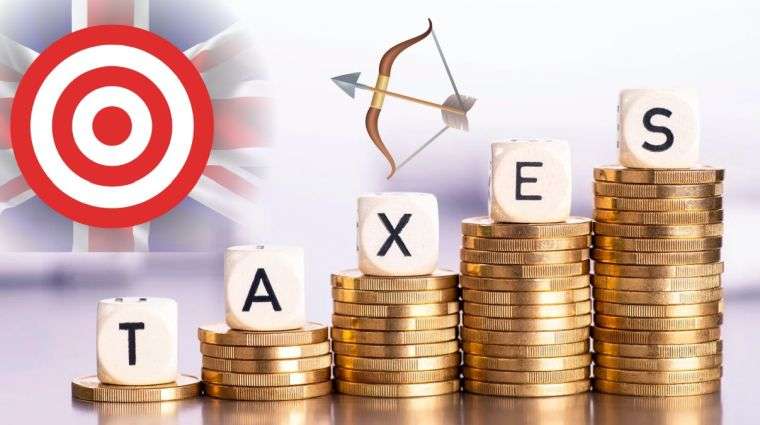
The legal UK gambling market has experienced a recent, dramatic increase in the Remote Gaming Duty (RGD) on online casino-style games and bingo, from 21% to 40%, effective April 1, 2026.
The UK government motivated this huge tax hike mainly using the following reasons:
We will have to wait and see if the projections for increased taxes will miss their targets, as in the Netherlands.
The gambling industry in the UK has warned that the dramatic increase in the Remote Gaming Duty to 40% will lead to job losses, reduced investment in the UK sector, and an increase in the illegal (black-market) side of the industry.
It’s still too early to tell what the long-term implications will be from this UK tax hike, but some signs are starting to appear, for example, the closure of smaller to medium-sized UK casinos such as Queenplay Casino.
Increased taxes make it more challenging for legal gambling sites to operate a profitable business.
The implication is that companies that manage to stay in the market need to cut costs somewhere to offset the added taxes.
One sure way is to cut or decrease bonuses and promotions to save costs. Another one is to offer online slots with much lower RTPs.
Lower RTPs will lead to players losing their money faster, as you get fewer spins on average from your deposited balances.
The black market alternatives in the UK become much more lucrative for players when bonuses and promotions are larger, and RTPs are higher than those offered by legal casinos.
Illegal gambling is growing in the UK, and this has become a big concern for the government, regulator and all UKGC-licensed operators.
It has been reported that the illegal market now makes up to at least 9% of the total UK market, or more than 1.5 million Brits playing on illegal sites each year.
The Betting and Gaming Council (BGC) has also released an open letter to the major tech companies in an attempt to stop illegal gambling sites from marketing their services on the biggest sites, apps and platforms.