Sami Kurvinen

Big Daddy Gaming Granted a UKGC License
Big Daddy Gaming is the latest slot developer to receive a UKGC license, meaning it will soon make…

Results for:

News

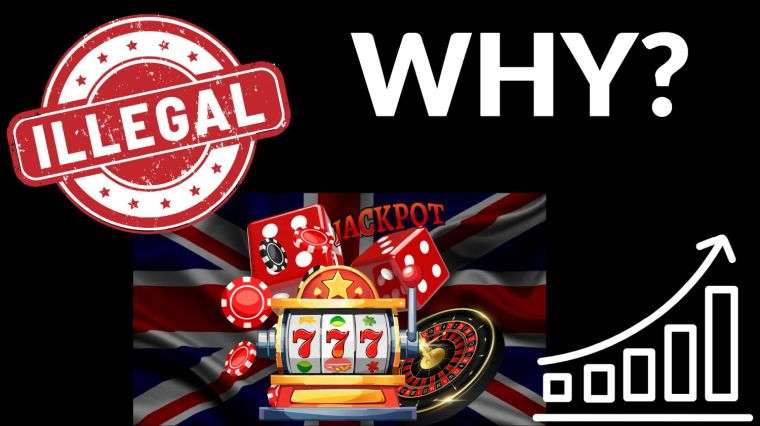
Illegal gambling, or playing at black-market casinos, is a growing headache for regulators across Europe and for all licensed operators.
For example, recent data suggest that the black market has grown to 53% in the Netherlands, 29% in Sweden, and over 50% in Germany.
However, the UK is not spared; instead, this is a serious and growing issue.
On this page, we will look more closely into black market gambling and why it’s growing in the UK.
Common factors include VPNs, self-excluded players, targeting under-18s, cryptocurrencies, and illegal advertising.
Black market casinos accept players from a regulated market without a valid licence. These are therefore illegal casinos.
For example, to legally accept players from the UK, an operator must apply for and be granted a gambling licence by the UK Gambling Commission (UKGC).
It’s not illegal for players in Great Britain to play on black market casinos, but the operators are breaking the law by accepting GB players.
The main reason is that you aren’t protected when gambling on black market casinos.

Illegal gambling is unfortunately growing fast in the UK, with recent studies showing that it has grown by 345% since 2022 and now makes up to at least 9% of the total UK market or about more than 1.5 million Brits playing on illegal sites each year.
The gambling industry is also worried that the black market will continue to grow due to increased regulations that interfere with the overall user experience at UKGC-licensed sites and the recent increase in the Remote Gaming Duty (RGD) tax from 21% to 40% on April 1, 2026.
A growing segment of the player base that gambles on illegal sites comprises vulnerable players who have self-excluded from legal alternatives through GamStop.co.uk or other options.
A quick online search will give you many options for where to gamble on illegal sites that are so-called “not on GamStop casinos”.
Increased use of VPNs has also contributed to more UK gamblers finding ways to register accounts and deposit funds into these black-market casinos.
Many of these illegal sites also allow players to create accounts without proper identity checks, leading to under-18s gambling on these sites.
UKGC-licensed operators are not allowed to accept cryptocurrencies such as Bitcoin, while some of the biggest brands globally focus solely on these payment methods, leading gamblers to seek these alternatives instead.
These black-market casinos have also, until recently, been allowed to advertise their services on Premier League teams’ match shirts as the main sponsors, which hasn’t helped the case.
Lastly, the increase of the Remote Gaming Duty (RGD) tax from 21% to 40% for UK operators has also led to UKGC-casinos being forced to lower the RTPs on their games to cope with this new reality, leading to black market casinos being able to offer higher payout rates and more lucrative bonuses on their sites.
We still need more time and data to fully determine how much this tax hike has contributed to an increase in UK players seeking non-licensed alternatives.
Regulators such as the UKGC are fighting a challenging battle, but they are fully aware of the importance of tackling this issue before it becomes even bigger, as seen in other European markets, including the Netherlands.
Recently, the UKGC has started communicating with the regulated operators, which is the right step forward.
The UKGC also targets game and payment providers to ensure they comply and don’t offer their services to UK gamblers on these black-market sites.
Other methods include website and domain blocking. The UKGC identifies illegal sites and forces ISPs to geo-block or remove access entirely. They also routinely report thousands of rogue URLs to search engines for removal and delisting.