Sami Kurvinen
Big Daddy Gaming Granted a UKGC License
Big Daddy Gaming is the latest slot developer to receive a UKGC license, meaning it will soon make…

Results for:

News

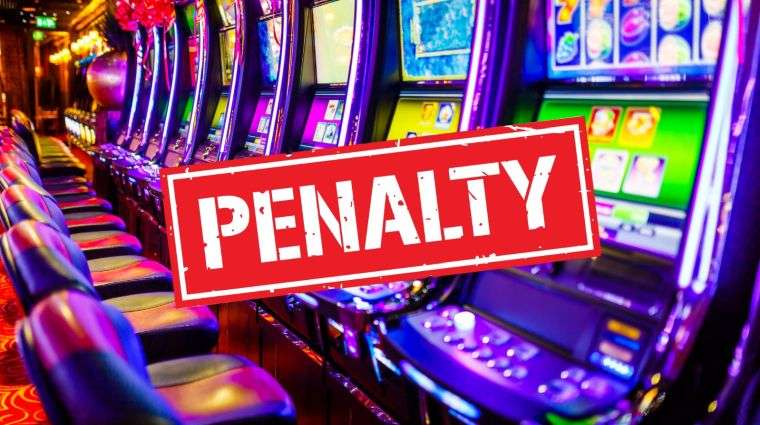
An adult gaming centre operator has been hit with a £150,000 fine after failing to comply with one of the gambling industry’s most important consumer-protection requirements, and the timing is hard to ignore.
Holland Park Leisure Limited, which operates three adult gaming centres in Leicester city centre, was fined by the UK Gambling Commission on 18 August after the regulator found that the company had failed to participate properly in a mandatory multi-operator self-exclusion scheme.
The penalty comes just days after Prime Minister Andy Burnham announced plans to give councils greater control over what businesses can open on Britain’s high streets, including proposals affecting adult gaming centres and betting premises.
At the heart of the case is a relatively simple idea: if someone recognises that gambling has become harmful to them, they should be able to ask gambling businesses to help them stop.
That is what self-exclusion is. A customer can enter a formal agreement asking a gambling operator to prevent them from gambling for a specified period. If they attempt to gamble during that period, the business is expected to take reasonable steps to stop them.
Importantly, self-exclusion does not have to apply to just one company. Multi-operator schemes allow a person to make a single request covering multiple gambling venues offering the same type of gambling in their area. For adult gaming centres, the Gambling Commission lists schemes including BACTA and SmartEXCLUSION.
For operators, participation isn’t optional. The Gambling Commission’s rules require relevant non-remote operators, including adult gaming centres, to participate in a multi-operator self-exclusion scheme. A breach can result in regulatory action, including a financial penalty.
In Holland Park Leisure’s case, the regulator said the company had previously been warned about its failure to comply but did not take adequate remedial action. It also provided misleading information during the Commission’s enquiries. Although it took some steps towards compliance once the licence review began, those earlier failures were treated as significant aggravating factors when the £150,000 penalty was calculated.
The company must also undergo an independent third-party audit examining its self-exclusion and responsible-gambling policies, procedures, controls and staff training.
Adult gaming centres, often simply called arcades, are gambling venues restricted to people aged 18 and over. They primarily offer gaming machines, including category C and D machines, alongside a limited proportion of higher-category B3 or B4 machines under the relevant licensing rules.
They are different from traditional family amusement arcades because they are specifically licensed for gambling and are accessible only to adults.
That distinction matters because these venues are now receiving increased political and regulatory attention.
The fine arrives at a particularly significant moment for Britain’s high streets.
On 11 August, Burnham’s government announced plans intended to give communities and councils more say over what opens in town centres. The package includes proposals requiring planning permission for new adult gaming centres and plans to scrap the Gambling Act’s long-standing “Aim to Permit” principle for betting shops and 24-hour slot-machine premises.
The existing principle effectively tells licensing authorities to aim to permit gambling premises where doing so is consistent with the statutory licensing objectives. Removing it would give councils greater scope to take a more restrictive approach to new gambling premises.
That means the Holland Park Leisure case lands at a moment when the government is already signalling a tougher attitude towards gambling businesses on high streets.
However, there is an important distinction. The £150,000 fine is a regulatory enforcement action over specific compliance failures; the government’s high-street proposals are a broader policy intervention. The two should not be confused as being directly connected.
Together, they point in the same direction: gambling operators face greater scrutiny over both how they protect customers and where they are allowed to operate.
The self-exclusion issue is particularly significant because the system exists for people who have already recognised that their gambling may be causing them harm. The regulator’s message to operators is therefore straightforward: these safeguards are not optional extras. They are part of the conditions under which gambling businesses are allowed to operate.
For Holland Park Leisure, that failure has now resulted in a £150,000 bill and an independent audit. For the wider industry, the case is another warning that responsible gambling requirements will likely remain under the spotlight as the government’s proposed high-street reforms move forward.